
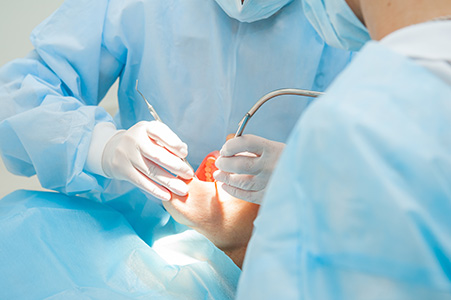
Oral and maxillofacial surgery focuses on diagnosing and treating conditions that affect the mouth, jaw, face, and surrounding structures. These procedures go beyond routine dental care, and may include tooth extractions, impacted wisdom teeth removal, and dental implant placement, in addition to jaw correction, and treatment of facial injuries or infections. Oral surgeons receive advanced training that allows them to manage complex anatomy, restore function, and support facial balance. Careful evaluation, imaging, and treatment planning help ensure procedures are both effective and safe. Oral surgery can relieve pain, improve chewing and speech, and support long-term oral health. It also plays an important role in preparing patients for restorative or cosmetic dental treatments. Each plan is tailored to the individual, with attention to comfort, healing, and outcomes. It is suggested you see a dentist if you have jaw pain, impacted teeth, related facial concerns, or have been told oral surgery may be needed.
For more information about oral surgery, contact . Our offers expert and compassionate care to ensure the best possible outcomes for your oral health.
Oral surgery is a specialized field of dentistry focused on diagnosing and treating a wide range of conditions affecting the mouth, teeth, jaws, and face. This branch of surgery addresses issues that cannot be managed by general dental care, often involving complex procedures that require advanced skills and expertise.
Several conditions may necessitate oral surgery. Impacted teeth, particularly wisdom teeth that fail to erupt properly, are a common reason. These teeth can cause pain, infection, and alignment problems, necessitating their surgical removal. Other conditions include severe tooth decay or damage that requires extraction, jaw misalignment, and congenital defects such as cleft lip and palate. Oral surgery also addresses issues like temporomandibular joint, or TMJ, disorders, facial trauma, and certain oral cancers.
Determining the need for oral surgery typically involves a thorough evaluation by a dentist or oral surgeon. This process includes a detailed medical and dental history, clinical examination, and diagnostic imaging such as X-rays, CT scans, or MRIs. These tools help assess the extent of the problem and develop an appropriate treatment plan. For instance, impacted wisdom teeth might be discovered through routine X-rays during a dental check-up, prompting a referral to an oral surgeon for extraction.
Oral surgery is performed under various forms of anesthesia, ranging from local anesthesia to sedation or general anesthesia, depending on the procedure’s complexity and patient needs. Recovery times and post-operative care vary, but patients generally receive detailed instructions to ensure proper healing and minimize complications.
Are there any risks associated with oral surgery?
As with any surgery, there are potential risks such as infection, bleeding, or complications with anesthesia. Your dentist will discuss these risks and how to minimize them.
Will I experience pain after oral surgery?
Some discomfort is normal after oral surgery, but it can be managed with prescribed pain medication. Your surgeon will provide specific instructions for pain management.
If you have any questions, please feel free to contact our office located in Rancho Santa Margarita, CA .