
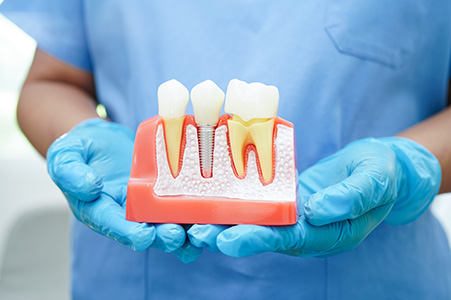
When one tooth is missing, two common solutions are a single dental implant or a three-unit bridge. A dental implant replaces the missing tooth root with a small post placed in the jawbone, topped with a custom crown. It stands alone and does not rely on neighboring teeth. A three-unit bridge fills the gap by placing a false tooth between two crowns that are attached to the adjacent teeth. Those teeth must be reshaped to support the bridge. The right choice depends on bone health, the condition of nearby teeth, overall health, cost considerations, and long-term goals. Implants often last longer and help preserve bone, while bridges may be completed faster when implants are not ideal. A dentist evaluates X-rays, bite, and oral health to recommend the most appropriate, stable, and comfortable option for each patient. If you have a missing tooth, it is suggested that you see a dentist for an evaluation and care.
For more information about dental crowns and bridges, contact . Our provides expert and precise care to restore the function and appearance of your teeth.
Dental crowns and bridges are common restorative dental treatments used to repair damaged or missing teeth, restoring both functionality and aesthetics to the smile. Crowns are tooth-shaped caps that are placed over damaged or weakened teeth to restore their strength, shape, size, and appearance. They can be made from various materials such as porcelain, metal, or a combination of both, depending on the specific needs of the patient.
Bridges are used to replace one or more missing teeth by anchoring artificial teeth to adjacent healthy teeth or dental implants. The adjacent teeth, known as abutments, are capped with crowns to provide support for the bridge. Like crowns, bridges can be made from different materials to match the natural color and contour of the patient’s teeth, ensuring a seamless and natural-looking restoration.
Both crowns and bridges offer several benefits, including improved chewing and speaking abilities, enhanced appearance, and the prevention of further dental problems caused by misalignment or missing teeth. Proper oral hygiene, including regular brushing, flossing, and dental check-ups, is essential to maintain the longevity and effectiveness of these restorations.
How Long Do Dental Crowns and Bridges Last?
The lifespan of crowns and bridges varies depending on factors such as the material used, oral hygiene, and chewing habits, but they typically last five to 15 years or longer with proper care.
Are There Alternatives to Dental Crowns and Bridges?
Alternatives to crowns and bridges include dental implants, dentures, or other restorative treatments, depending on individual needs and preferences.
If you have any questions, please feel free to contact our office located in Rancho Santa Margarita, CA .
.