
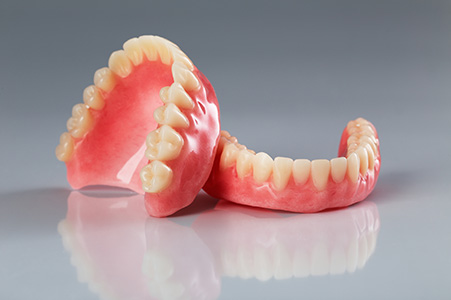
Tooth loss is a common issue affecting many individuals due to factors like decay, gum disease, or injury. Full and partial dentures are solutions to restore functionality and aesthetics. Full dentures replace all teeth in the upper or lower jaw, while partial dentures fill gaps left by missing teeth, supported by the remaining natural teeth. The longevity of dentures varies based on care and usage. Typically, full dentures last between five to 10 years. Partial dentures can last slightly longer, ranging from five to 15 years. Over time, dentures may require adjustments due to changes in the mouth’s structure, wear and tear, or damage. Full dentures rest directly on the gums and require a period of adjustment for comfort. Partial dentures, made with a metal or acrylic framework, are more stable due to their attachment to existing teeth. If you have or need dentures, it is suggested that you schedule an appointment with your dentist for a check-up and proper maintenance.
For more information about dentures and partial dentures, contact . Our offers expert and personalized care to ensure a comfortable fit and natural appearance.
Dentures and partial dentures are dental prosthetic devices used to replace missing teeth and restore oral function and aesthetics. Dentures are complete sets of artificial teeth mounted on a gum-colored base, designed to replace an entire arch of missing teeth. They are custom-made to fit the individual’s mouth comfortably and securely. Dentures can be removable or fixed, with removable dentures allowing for easier cleaning and maintenance.
Partial dentures are used when some natural teeth remain in the mouth. They consist of artificial teeth attached to a base that matches the color of the gums, and they use clasps or precision attachments to anchor onto existing teeth for stability. Partial dentures fill in gaps left by missing teeth, preventing surrounding teeth from shifting out of place and maintaining proper alignment.
Both dentures and partial dentures require proper care and maintenance to ensure longevity and oral health. This includes daily cleaning, removal at night for rest, and regular check-ups with a dentist for adjustments and evaluations. Additionally, adjustments may be needed over time due to changes in the jawbone and gums.
What is the Difference Between a Bridge and a Denture?
A bridge is a fixed dental restoration used to replace one or more missing teeth by anchoring artificial teeth to adjacent natural teeth or dental implants. In contrast, a denture is a removable dental appliance that replaces multiple missing teeth or an entire arch, resting on the gums and held in place with adhesives or natural suction. While bridges offer a more permanent solution with stability comparable to natural teeth, dentures are versatile and suitable for varying degrees of tooth loss, providing easy removal for cleaning and maintenance.
Is it Hard to Adapt to Dentures or Partial Dentures?
While dentures and partial dentures offer functional and aesthetic benefits, it may take some time for wearers to adjust. Patients may experience initial discomfort or difficulty speaking and eating, but with practice and patience, most individuals adapt well to their new prosthetic teeth, enjoying improved confidence and quality of life. Regular dental care and proper hygiene practices are essential for the success and longevity of dentures and partial dentures.
If you have any questions, please feel free to contact our office located in Rancho Santa Margarita, CA .